
Rule 1: Never Let a Rug Float Untouched in the Center of Seating
When a coffee table sits alone on a 5×8 rug with 10 inches of bare floor separating the rug from the sofa and accent chairs, the room fragments into disconnected rectangles. Instead, follow the Front-Legs Minimum Rule: slide the rug at least 8 to 12 inches underneath the front legs of the main sofa and every surrounding lounge chair, extending the rug width 6 to 10 inches wider than both outer arms of the sofa. In 90% of North American living rooms, that single rule automatically requires an 8' × 10' or 9' × 12' rug—never a 5' × 8'.
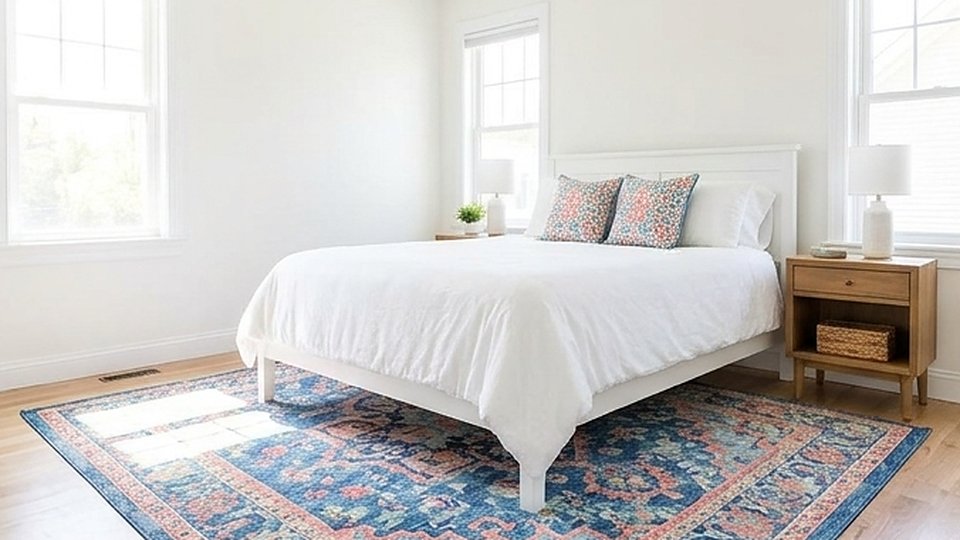
Rule 2: Queen and King Platform Bed Placement
In bedrooms—especially modern floating platform beds with under-bed perimeter LED lighting—lay your rug perpendicular to the bed starting 3 to 4 inches in front of your nightstands so the nightstands sit level on hard flooring while the rug extends generously past the sides and foot of the bed:
- Queen Bed (60" wide × 80" long): An 8' × 10' rug delivers 18 inches of soft textile landing on each side and 24+ inches past the footboard; step up to 9' × 12' in spacious primary suites.
- King Bed (76" wide × 80" long): An 8' × 10' leaves barely 10 inches per side—too narrow for bare feet in the morning. Specify a 9' × 12' minimum so both sides enjoy a balanced 22-inch border.
Rule 3: The 24-Inch Dining Chair Slide Clearance
Measure your dining table top (with leaves extended if used weekly) and add a minimum of 48 to 60 inches to both length and width (24 to 30 inches per side). When guests push chairs back to stand up, the rear chair legs must remain completely on the rug rather than catching and tipping over the binding edge.