
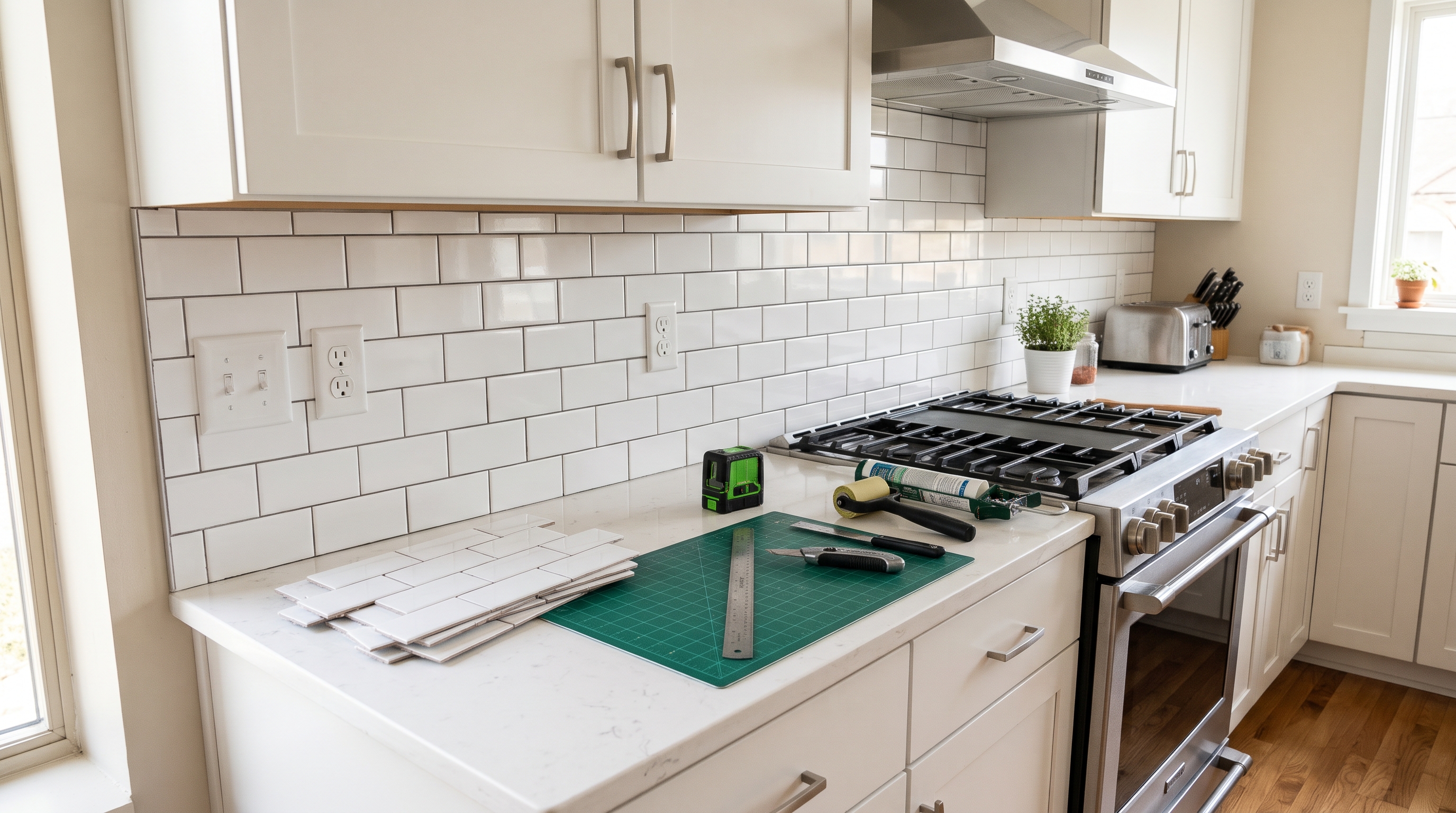
Quick Answer: A standard 10-foot kitchen backsplash (at the typical 18-inch height between counter and upper cabinets) measures 15 square feet. After adding a 10% to 15% waste factor for outlet cutouts and edge trims, plan on purchasing 17 to 18 square feet of actual tile coverage—which translates to 17–18 straight-edge 12x12 sheets, 21–22 interlocking 12x12 sheets (3 packs of 10), or 29–30 interlocking 10x10 sheets (3 packs of 10).
If your 10-foot run includes an open stove section where the backsplash rises to 30 inches behind a 30-inch range hood, add 2.5 square feet to your base measurement (17.5 sq ft net, or 19.5–20.5 sq ft with waste).
The single most common mistake DIYers make with peel and stick backsplash isn't bad measuring—it is trusting the nominal sheet size printed on the listing instead of the actual usable coverage after interlocking edges overlap.
> Have a corner L-shaped counter, a window sill, or non-standard cabinet height? Plug your exact wall segments and tile pack coverage into our [Tile & Backsplash Calculator](/tile-calculator.html) to lock in your pack count before ordering.
Quick Buying Chart: 10ft Kitchen Backsplash
Most peel and stick backsplash tiles are sold in 10-sheet packs. Use this chart to match your wall layout and tile format to the right pack quantity.
| Wall Layout (10ft Run) | Base Area | Target Area (+10%–15% Waste) | 12"×12" Straight-Edge (1.0 sq ft/sheet) | 12"×12" Interlocking (~0.80 sq ft usable) | 10"×10" Interlocking (~0.58 sq ft usable) |
| :--- | :--- | :--- | :--- | :--- | :--- |
| Standard 18" Height (counter to cabinets) | 15.0 sq ft | 16.5 – 17.3 sq ft | 17–18 sheets (2 packs) | 21–22 sheets (3 packs) | 29–30 sheets (3 packs) |
| 18" Height + 30" Range Hood Section | 17.5 sq ft | 19.3 – 20.1 sq ft | 20–21 sheets (2–3 packs) | 25–26 sheets (3 packs) | 34–35 sheets (4 packs) |
| Tall 24" Height (open shelving wall) | 20.0 sq ft | 22.0 – 23.0 sq ft | 22–23 sheets (3 packs) | 28–29 sheets (3 packs) | 38–40 sheets (4 packs) |
The Exact Math Behind a 10-Foot Kitchen Wall
Walking through the numbers takes two minutes and prevents the headache of mismatched dye lots from a rushed second order.
1. Measure Standard Wall Area:
Standard U.S. kitchen upper cabinets sit 18 inches (1.5 feet) above the countertop.
`10 ft × 1.5 ft = 15 square feet`
2. Account for the Stove / Range Hood (If Applicable):
A standard U.S. range is 30 inches (2.5 feet) wide, and the open wall behind it usually extends an extra 12 inches (1 foot) upward to meet a range hood or over-the-range microwave clearance.
`2.5 ft × 1 ft = 2.5 additional square feet` → `17.5 sq ft total`
3. Do NOT Subtract Electrical Outlets:
A standard duplex outlet covers less than `0.1 sq ft`. Subtracting outlets saves virtually zero material, while cutting around outlet boxes is the #1 source of ruined sheets. Leave them in your total.
4. Add Your Waste Factor (10% vs. 15%):
- Add 10% (`× 1.10`) for classic horizontal subway tiles on a straight, unbroken 10-foot wall with 1–2 outlets.
- Add 15% (`× 1.15`) for herringbone, chevron, hexagon, or marble-vein sheets, or if your wall has 3+ outlets, a window casing, or an inside corner.
The "Interlocking Sheet" Trap: Why 20 Sheets Often Falls Short
If you see a 10-pack of "12x12 Peel and Stick Subway Tiles" online, it is natural to assume two packs give you 20 square feet—plenty for a 15-square-foot wall. In reality, you will frequently run two to three sheets short on the final stretch.
Here is why:
- Trimmed Starter Edges: Interlocking sheets have staggered brick or jagged tabs along the left and right edges. On the very first column against a wall or cabinet, you must slice off that staggered tab to create a crisp straight edge.
- Built-In Overlap Margin: Each subsequent sheet overlaps the previous sheet's grout line by roughly 0.5 to 1 inch to keep water out and prevent seams from lifting.
- Real-World Coverage Check: Always ignore the title dimensions and look for the line in the product specs labeled "Total Coverage per Pack." A typical 10-pack of 12x12 interlocking sheets actually covers 8.0 to 9.2 square feet—meaning two packs may only yield 16 to 18.4 square feet, leaving almost zero margin for cutting errors on a 10-foot wall.
Choosing the Right Pattern and Backing for a Kitchen Wall
Not all peel and stick tiles survive kitchen steam, cooking grease, and heat equally well. Before clicking buy, check three construction details:
- Rigid SPC / Composite Core vs. Thin Vinyl: Thicker 3mm–4mm aluminum-composite or stone-polymer (SPC) tiles bridge minor drywall imperfections and look far closer to real ceramic grout than paper-thin vinyl stickers. For a deeper comparison of adhesive types and surface prep, read our [Peel and Stick Backsplash Guide](/guide-peel-stick-backsplash.html).
- Heat Clearance Behind the Range: Standard vinyl gel tiles can warp or yellow if placed directly behind a high-BTU gas burner without a backguard. Verify that your chosen sheets are rated heat-resistant and keep a clean clearance zone—or add a slim stainless steel strip—directly behind bare gas flames.
- Batch / Dye Lot Consistency: Even crisp white subway tiles shift subtly from warm cream to cool blue-white between factory runs. Ordering your extra safety pack in the same shipment guarantees every sheet along your 10-foot span matches under your [kitchen under-cabinet lighting](/guide-kitchen-under-cabinet-lighting.html).
From Kim's Desk: 3 Pro Habits for a Seamless 10-Foot Install
1. Degrease Twice, Not Once: Invisible cooking oil mist coats kitchen walls years before it becomes visible. Scrub the entire 10-foot span with a TSP substitute or heavy-duty degreaser, wipe with clean water, and let the drywall cure completely for 24 hours. Peel and stick failures almost always trace back to skipped prep, not weak glue.
2. Pull a Level Reference Line—Never Trust the Countertop: Almost no 10-foot kitchen countertop is perfectly level from end to end. Find the lowest point of your counter, measure up one sheet height, and strike a crisp horizontal line with a laser level so your tile courses stay dead straight all the way across.
3. Finish the Top and Bottom with Micro-Bead Caulk: Even waterproof tiles need a clean moisture barrier where the bottom row meets the countertop. Run a razor-thin bead of 100% clear or white kitchen silicone along the counter seam, and cap exposed raw edges with slim aluminum peel-and-stick edge trim for a built-in architectural look.
Essential Project Checklist for a 10ft Backsplash Refresh
Gathering your cutting and prep tools before peeling the first backing turns a 10-foot wall into a clean half-day upgrade:
- Heavy-duty utility knife with fresh snap-off blades (or sharp aviation tin snips for thicker composite/metal-backed tiles)
- Self-healing cutting mat and 24-inch metal straightedge for clean, square vertical cuts
- Cross-line laser level to keep your first 10-foot horizontal course dead level regardless of counter slope
- TSP substitute degreaser and lint-free microfiber cloths for oil-free wall adhesion
- Hard rubber J-roller to press every sheet firmly onto the drywall and eliminate edge lift
- Peel-and-stick aluminum or PVC edge trim for clean exposed ends near windows or open cabinet sides
- 100% waterproof kitchen silicone caulk and dripless caulk gun to seal the countertop joint
Frequently Asked Questions
How many 12x12 peel and stick tiles do I need for a 10-foot backsplash?
For a standard 10-foot × 18-inch backsplash (15 sq ft), you need 17 to 18 straight-edge 12x12 tiles or 21 to 22 interlocking 12x12 tiles once you factor in edge overlap and 10%–15% cutting waste. In most cases, buying 3 packs of 10 interlocking sheets is the safest way to avoid running short mid-project.
How many square feet is a standard 10-foot kitchen backsplash?
A 10-foot run at the standard 18-inch height equals 15 square feet. If the backsplash extends up to 30 inches behind a 30-inch range hood, the total area increases to 17.5 square feet before waste.
Should I install peel and stick backsplash before or after under-cabinet lighting and hardware?
Install your backsplash before mounting new under-cabinet light bars or cord channels so your top tile cuts sit cleanly behind the fixtures. Once the tile is up, pairing it with fresh drawer pulls from our [Cabinet Hardware Upgrade Guide](/guide-cabinet-hardware-upgrade.html) finishes the kitchen facelift in a single weekend.
How much extra peel and stick tile should I order for waste?
Order 10% extra for simple subway grid layouts on a straight wall, and 15% extra for herringbone, hexagon, or walls with multiple outlets and corners. Keeping 2 to 3 spare sheets from the same dye lot in a flat drawer also gives you instant replacements if a tile ever gets scorched or damaged later. You can verify your exact custom layout anytime in our [Tile & Backsplash Calculator](/tile-calculator.html).